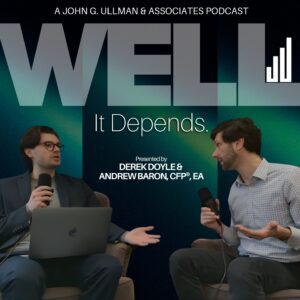
“Well… It Depends!” explores financial questions that rarely have a one-size-fits-all answer.
In this episode, hosts Andrew Baron, CFP®, EA, and Derek Doyle are joined by Jason Nickerson, CFP®, EA, President and CEO of John G. Ullman & Associates, to discuss one of the most complex areas of financial planning: equity compensation.
As markets reach new highs, many employees may find themselves holding a significant amount of company stock through equity compensation programs. But owning a concentrated position in the company you work for creates unique planning considerations—especially when your income, benefits, and investments may all be tied to the same organization.
Andrew, Derek, and Jason break down two important concepts that play a major role in equity compensation planning: risk tolerance and risk capacity. They discuss the difference between being emotionally comfortable with investment risk and having the financial ability to withstand potential losses, and why those two factors don’t always align when company stock is involved.
The conversation explores the lifecycle of equity compensation, including grants, vesting, exercising stock options, and selling shares. Jason explains the key planning decisions that come with each stage, including how taxes, diversification, investment strategy, and long-term financial goals should all work together.
The group also discusses common equity compensation mistakes, including holding too much company stock, misunderstanding the tax treatment of restricted stock units (RSUs) and stock options, and allowing loyalty or optimism about an employer’s future performance to influence investment decisions. They highlight why diversification is often an important consideration—even when the company has performed well.
Tax planning is another major focus of the episode. Andrew, Derek, and Jason discuss how vesting events can create ordinary income, why capital gains considerations matter when selling shares, and how proactive planning can help individuals prepare for potential impacts like higher tax brackets, Medicare premiums, and other tax-related consequences.
As employees approach retirement, equity compensation decisions can become even more important. The conversation covers strategies for managing concentrated positions, evaluating when to exercise options, incorporating equity compensation into a broader retirement plan, and balancing tax considerations with sound investment decisions.
Whether you currently receive equity compensation, are approaching retirement with company stock, or simply want to better understand how concentrated investments can impact your financial plan, this episode provides valuable insights into making informed decisions with one of the most complex forms of compensation.
If you’d like to discuss your specific situation with one of our CFPs®, please email info@jgua.com.
For the full transcript, click HERE